 Island Skies Astro
Going Deeper: How Emission Nebulae Emit Light
Emission nebulae shine because their gas becomes "energized" by nearby hot stars. Light from these stars contains large amounts of high energy ultraviolet radiation. This radiation can knock electrons free from the atoms in the gas. When those electrons later reattach to atoms and settle into lower energy states, they release light at specific wavelengths that correspond to specific colors.
In the Tadpoles Nebula image below, the left side of the slider shows the deep red glow typical of many emission nebulae. The Tadpoles Nebula (IC 410) is a large emission nebula in the constellation Auriga, and its red color comes from hydrogen, the most abundant gas in these regions. Hydrogen's strong red emission often sets the overall appearance of a nebula. But other gases are present as well. Slide the divider to the right to see the same region with the emission from oxygen isolated and enhanced, revealing a faint blue green light that highlights where this element is located within the nebula.
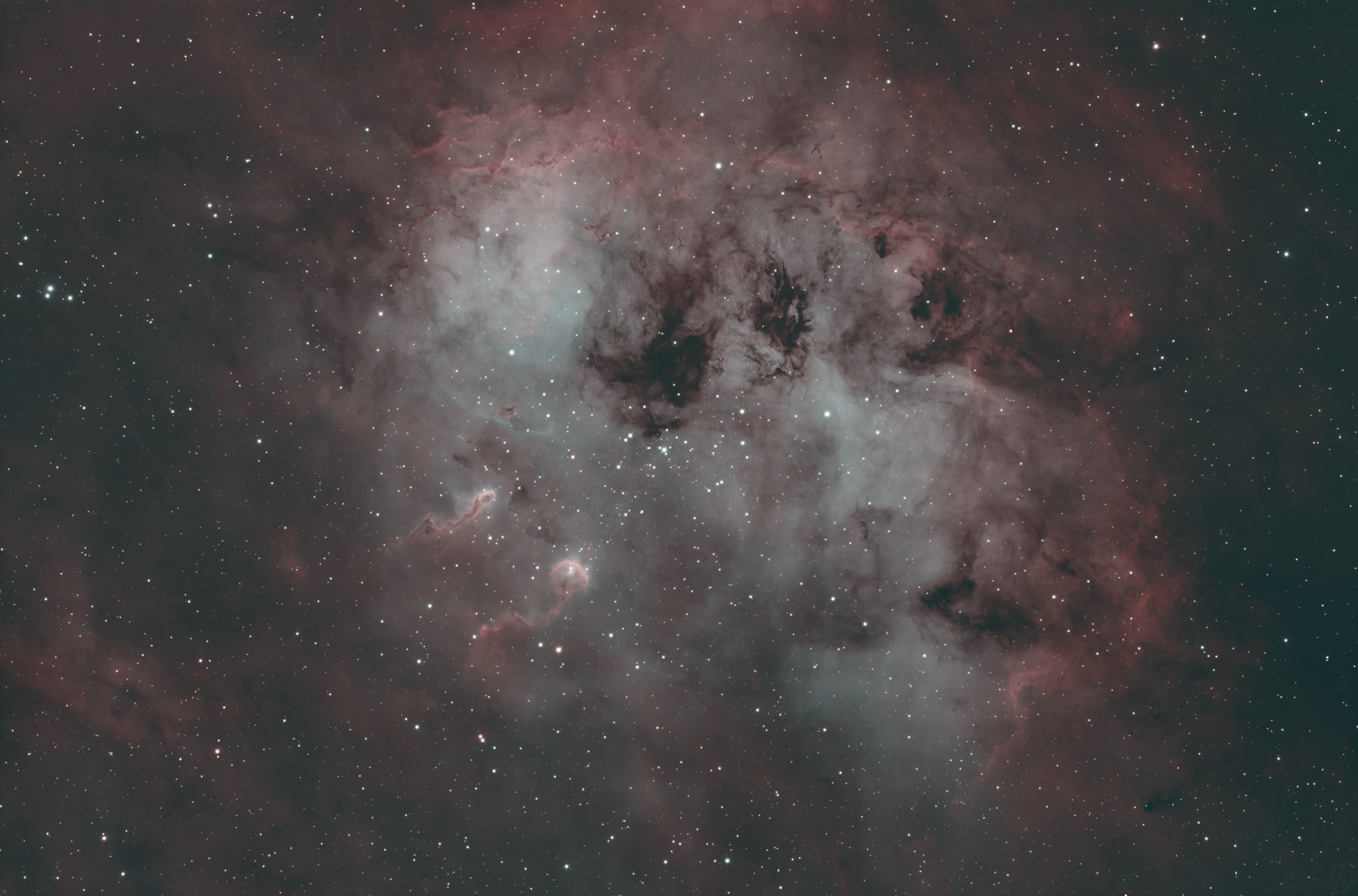
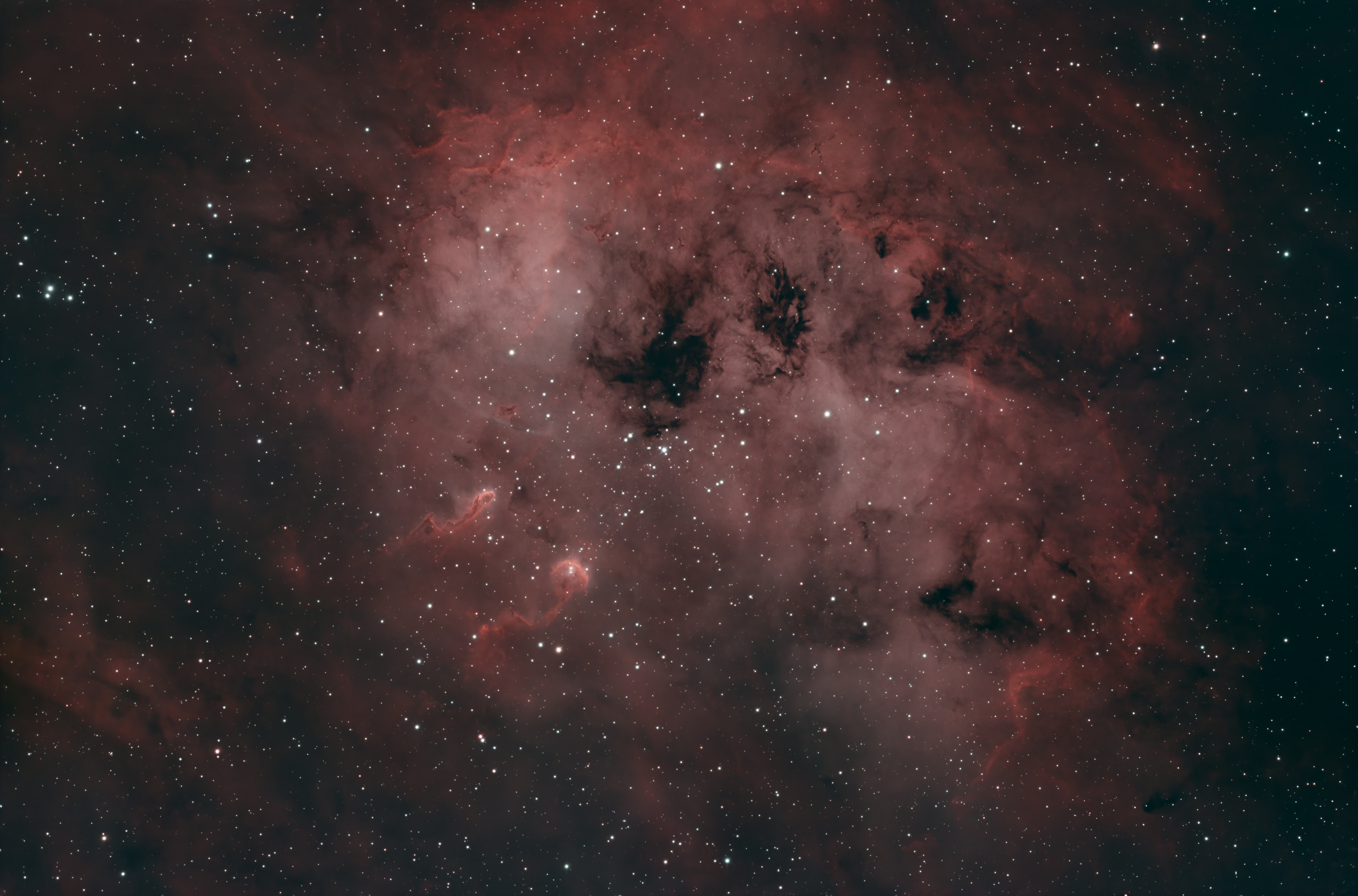 Hydrogen-alphaOxygen-III
The physics behind these colors may seem technical at first, but the core ideas are straightforward. In the following sections we will examine more closely what it means for gas to be "energized" and why different elements produce different colors of light.
What is Light?
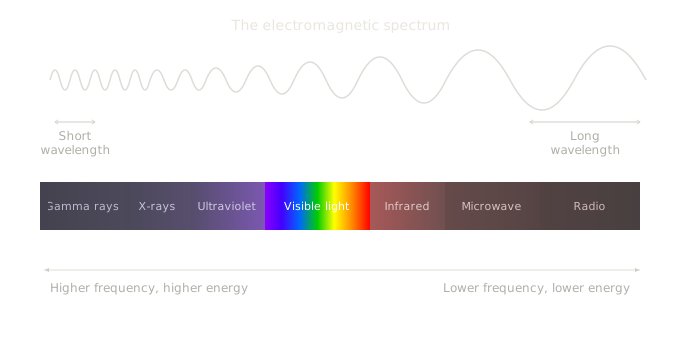
Light is a form of energy that travels through space as a wave. Like waves on water, light waves have a property called wavelength, which is the distance between two wave peaks. They also have a frequency, which tells us how many peaks pass by each second. These two ideas are linked: shorter wavelengths correspond to higher frequencies, and longer wavelengths correspond to lower frequencies.
Color is simply how our eyes perceive different wavelengths of light. Red light has a relatively long wavelength, while blue and violet light have much shorter wavelengths. But human vision covers only a narrow range of all possible wavelengths. Beyond the violet end of the spectrum lie wavelengths we cannot see, such as ultraviolet (UV) light.
Light also has a particle-like nature. It carries energy in tiny packets called photons. You can think of a photon as a single "unit" of light. The amount of energy in each photon depends on the light's frequency. Higher frequency light, like UV, carries more energetic photons. Lower frequency light, like red light, carries less energetic photons. This dual character of light, behaving as both a wave and a particle, is central to how emission nebulae work. The wave properties tell us about color, while the photon properties tell us about energy transfer.
How Light Interacts with Nebulae
Now that we know what light is and how it carries energy, we can look at what happens when it meets the gas in a nebula, which is made of countless individual atoms.
An atom has a small central nucleus made of protons and neutrons. Protons carry a positive electrical charge and determine what element the atom is. Neutrons contribute mass but play no direct role in how the atom interacts with light. Surrounding the nucleus is a cloud of electrons. These electrons are not free to sit anywhere they want around the nucleus. They can occupy only certain specific energy levels. You can imagine these levels as steps on a ladder. An electron can stand on one step or another, but never in between.
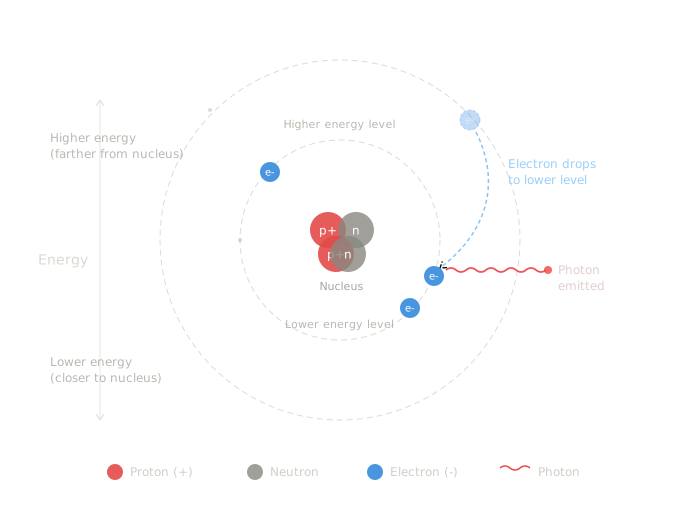
These energy levels are important because they determine how atoms interact with light. Each step requires a precise amount of energy to move between levels. If a photon has exactly the right energy, an electron can absorb it and jump to a higher level. Likewise, when an electron drops from a higher level to a lower one, it releases a photon whose energy, and therefore its color, matches the size of the step it falls through.
How Emission Nebulae "Shine"
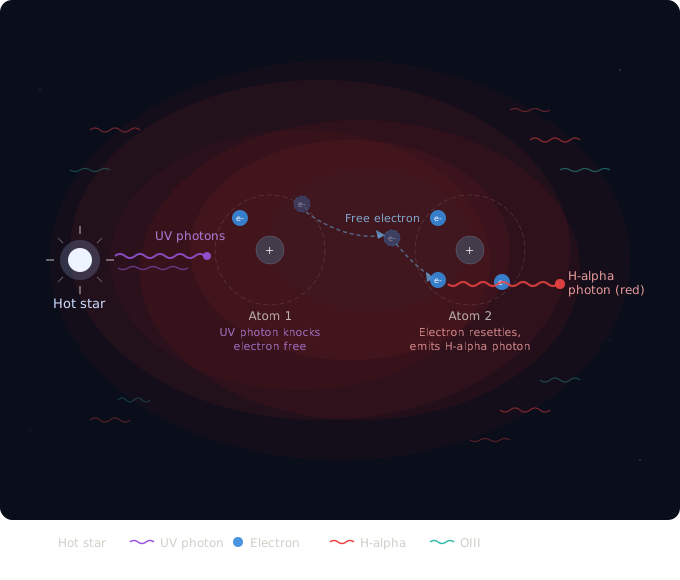
When the gas in a nebula is exposed to the light of nearby hot stars, it is flooded with UV photons. When a UV photon strikes an atom in the nebula, it transfers enough energy to knock an electron free from the atom.
Once an electron has been knocked free, it does not remain separate forever. In the thin gas of a nebula, electrons and the positively charged atoms they leave behind are constantly moving, and eventually an electron will collide with one of these atoms and attach to it again. The electron does not settle directly into the lowest energy level. It usually lands in a higher one.
From there, the electron moves downward through the atom's energy levels in a series of small steps, releasing a photon at each one. The color of each photon depends on the size of the step. Because hydrogen is the most common element in these clouds, one of its most frequent steps produces a red photon called hydrogen alpha. This is why many emission nebulae glow with a deep red light. Other elements contribute as well. Oxygen, for example, can emit a faint blue green light when its electrons settle into certain lower energy levels.
This process happens continuously throughout an emission nebula, driven by the intense ultraviolet radiation from nearby young stars. The result is a cloud of gas that creates its own light, producing the colors we see.
Summing Up
- High energy ultraviolet radiation from very hot stars can knock electrons out of their atoms in a nebula.
- When those electrons later recombine with atoms, they do so in a higher energy state rather than dropping straight to the lowest level.
- As the electron steps downward through the atom's energy levels, it releases light at each step.
- The frequency, or color, of the emitted light depends on how much energy is lost in each step.
- Hydrogen produces red light, oxygen produces blue green light, and other elements emit their own distinct colors.
- Because hydrogen is the most abundant gas in emission nebulae, its red emission usually dominates their overall appearance.