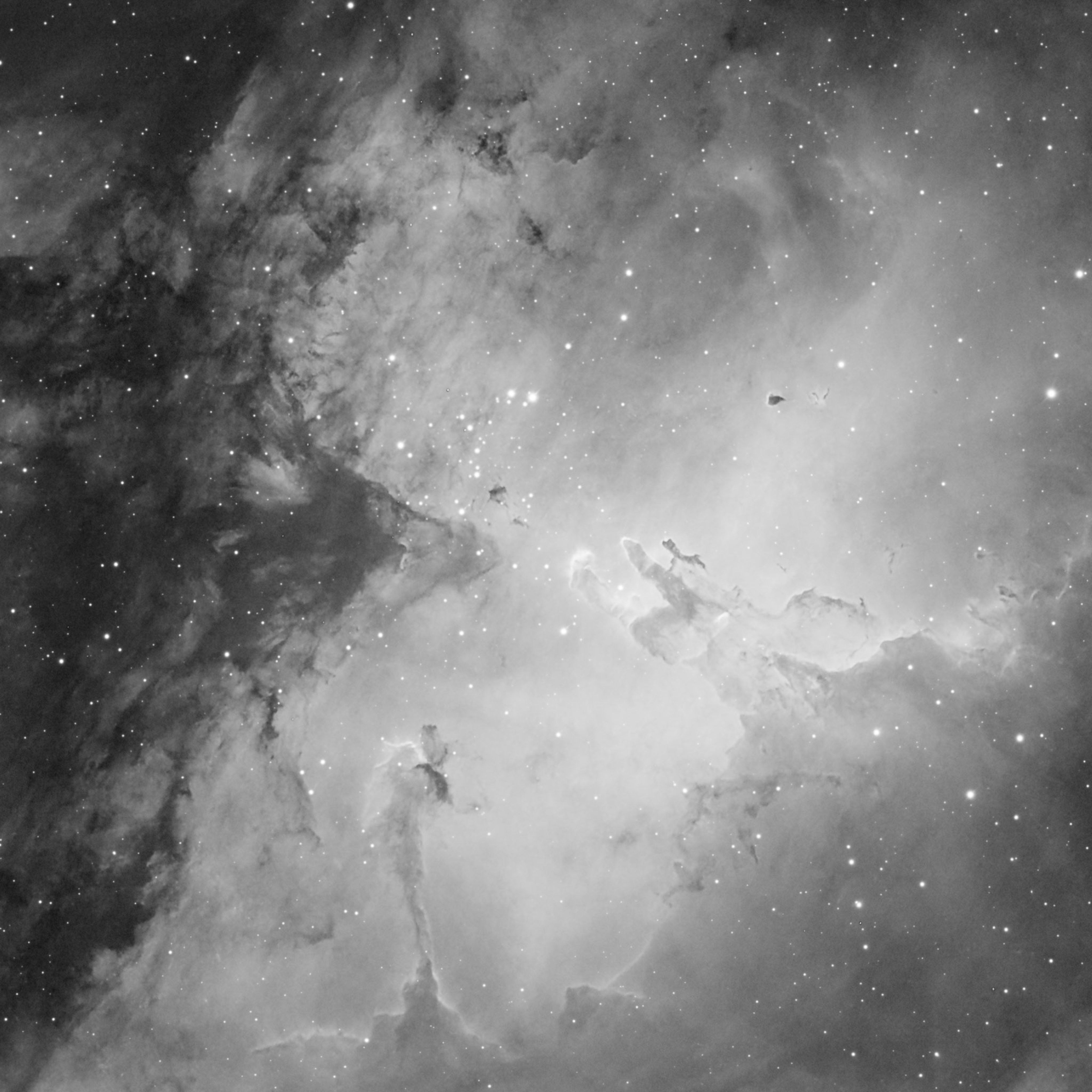
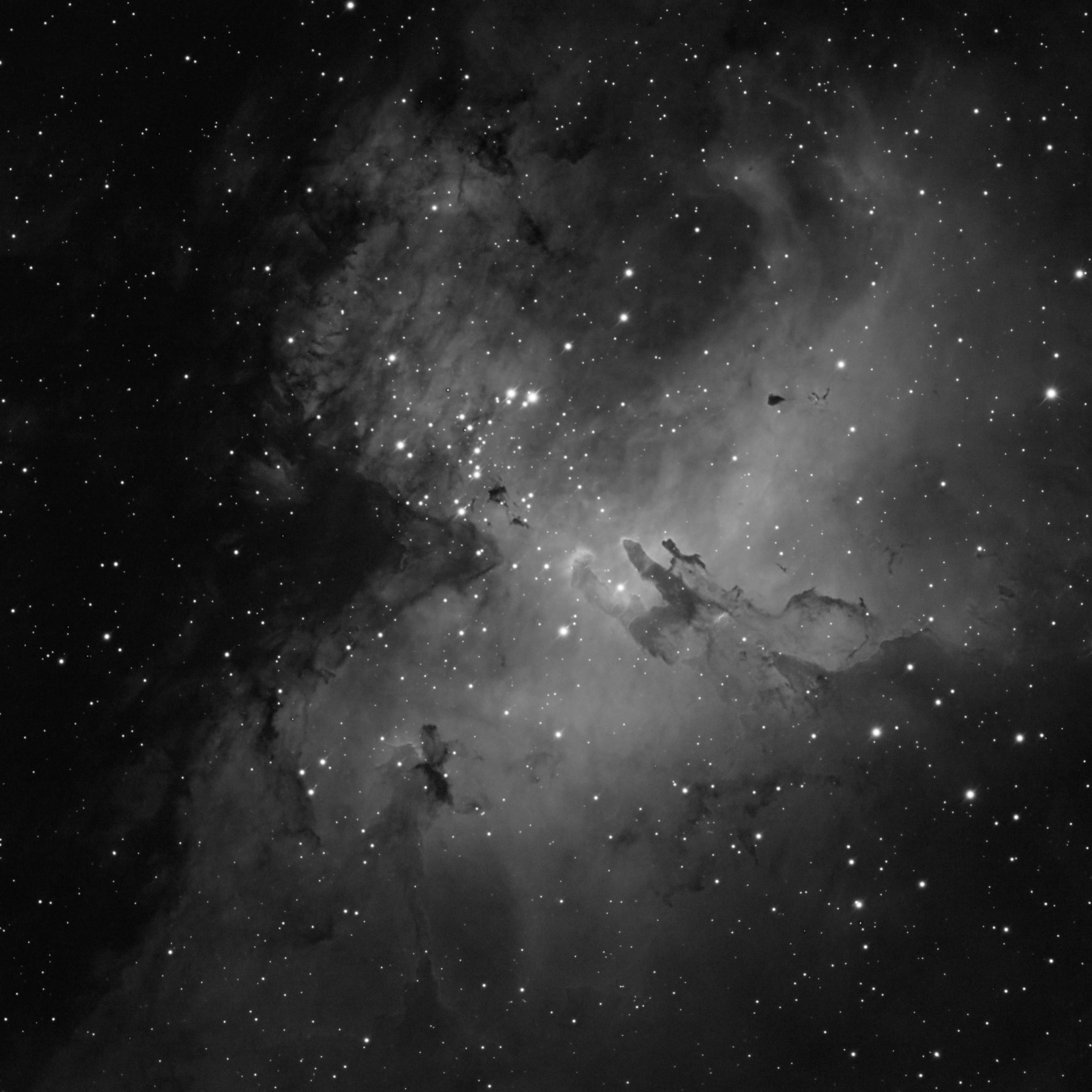
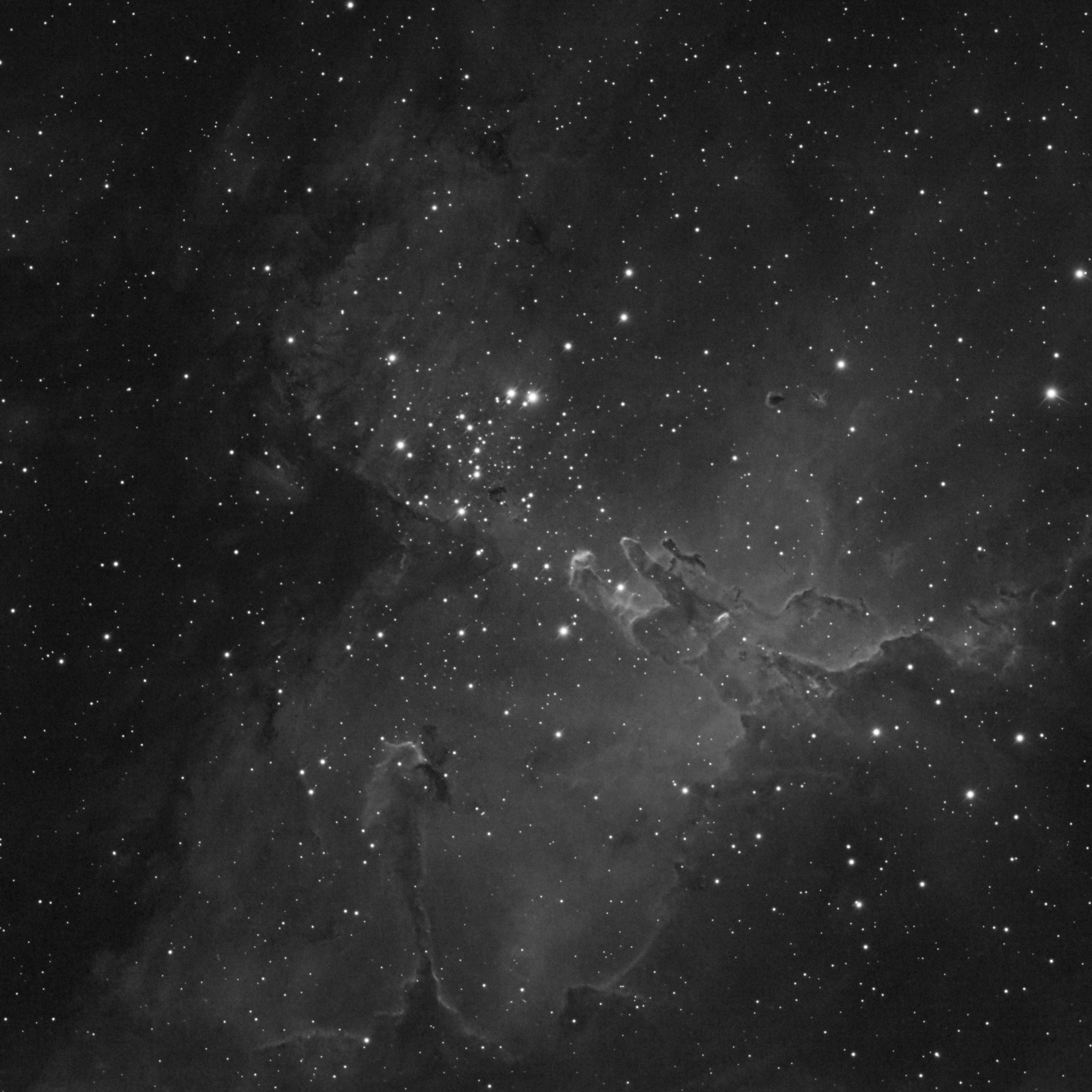
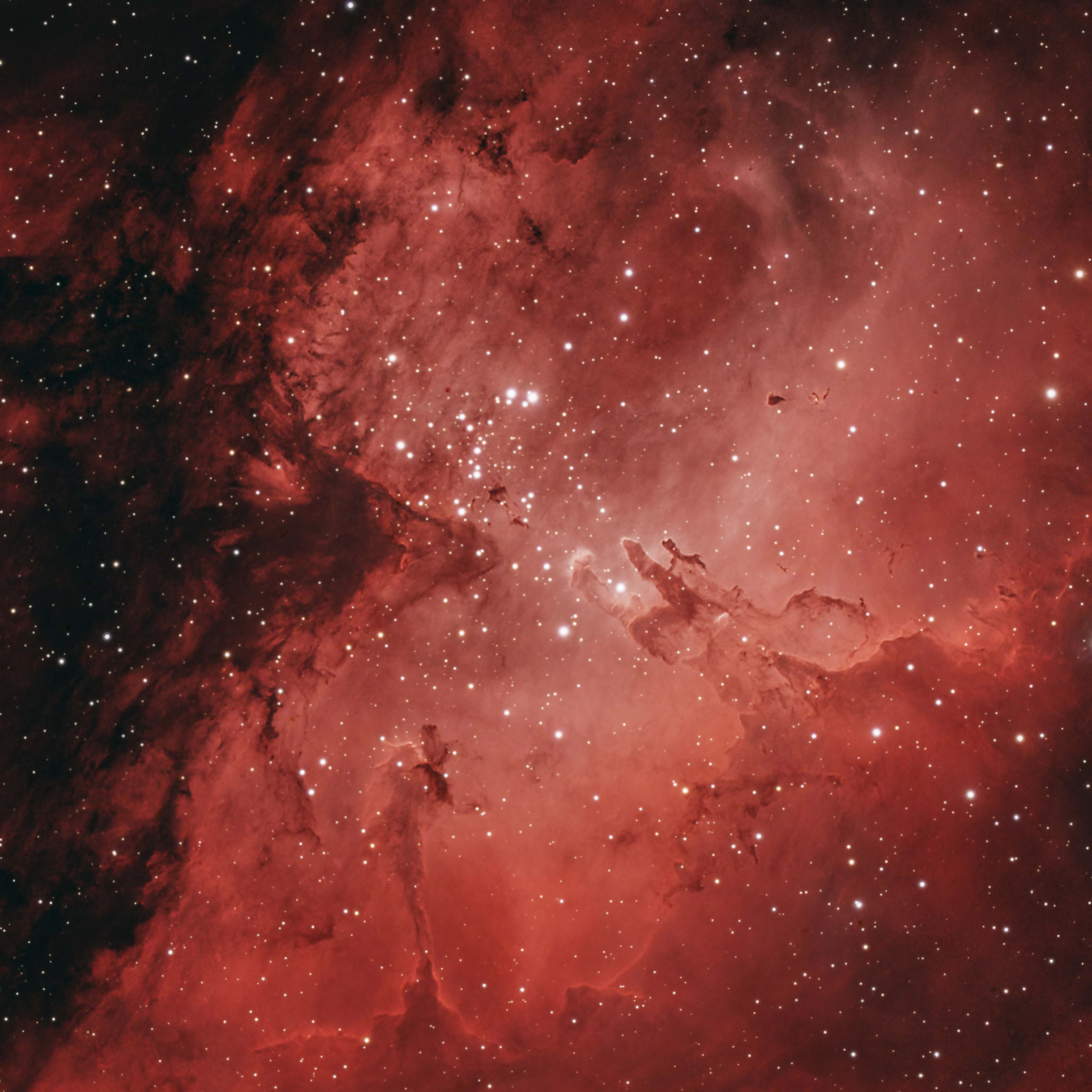
Narrowband imaging captures light emitted at very specific wavelengths, each corresponding to a particular element in the nebula. Rather than recording all visible light at once, narrowband filters block nearly everything except a narrow slice of the spectrum — often just a few nanometers wide. The result is that each filter isolates a single "voice" in the nebula's emission, making structure visible that broadband imaging misses entirely.
Why Different Elements Glow Different Colors
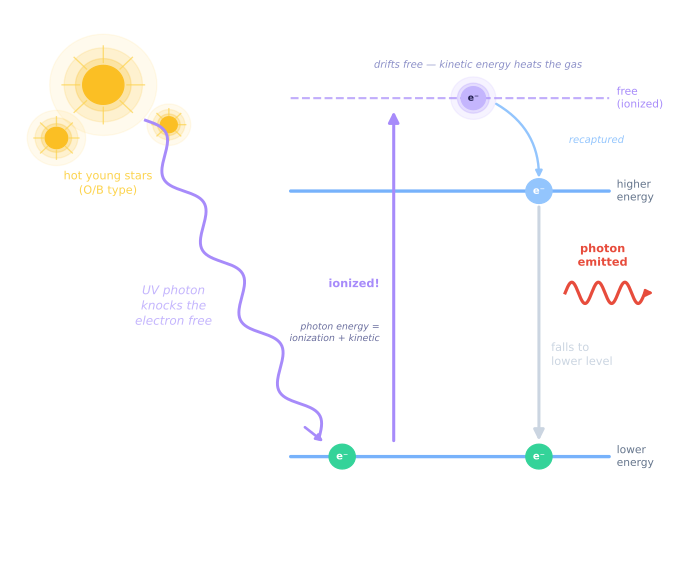
When ultraviolet radiation from hot stars strikes the gas in a nebula, it knocks electrons free from atoms. As those electrons recombine and settle back into lower energy states, they release light at wavelengths that are unique to each element — a kind of atomic fingerprint.
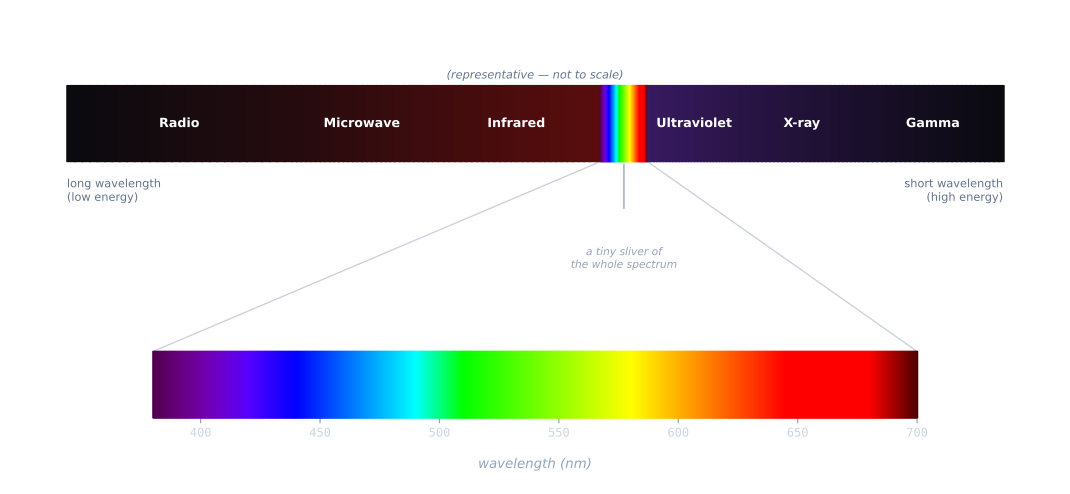
The electromagnetic spectrum. Visible light occupies only a narrow slice of the full range of wavelengths. Narrowband filters target specific positions within and just beyond this visible band.
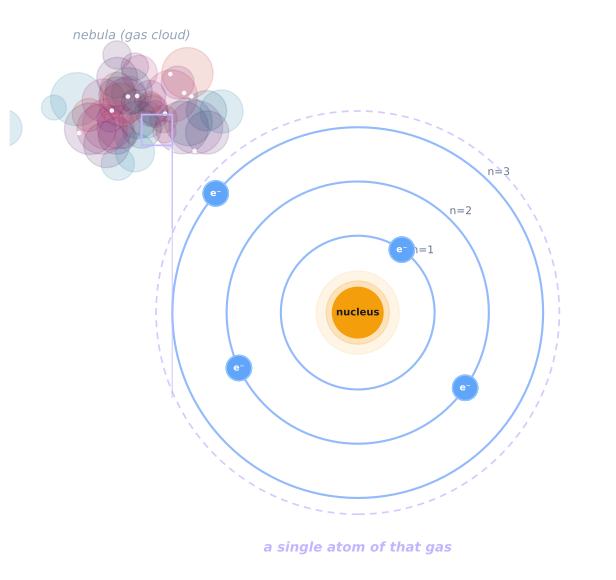
An atom in a nebula. Ultraviolet photons from nearby hot stars carry enough energy to strip electrons free from atoms in the surrounding gas.
How nebulae emit light. When a freed electron recombines with an atom and steps down through the atom's energy levels, it releases a photon at each step. The wavelength of each photon — and therefore its color — depends on the size of the energy step.
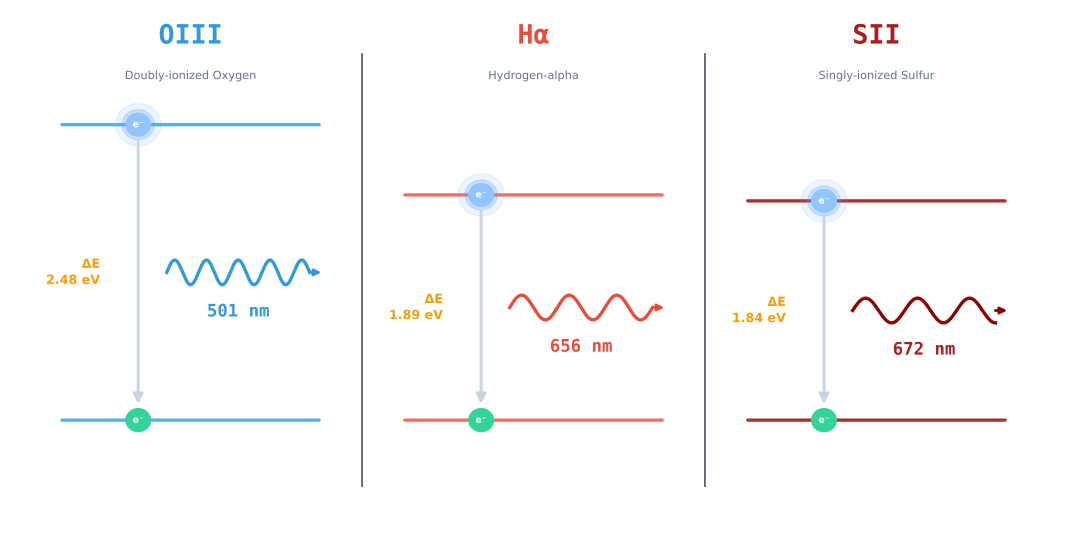
Atomic fingerprints. Each element emits light at specific wavelengths. Hydrogen, oxygen, and sulfur all emit at different positions in the spectrum, which is what makes it possible to isolate each one with a narrowband filter.
The Individual Channels
The three most commonly used narrowband filters target hydrogen alpha (Hα), oxygen III (OIII), and sulfur II (SII). Each reveals a different layer of the nebula.
Hydrogen alpha (Hα). The most abundant element in emission nebulae, hydrogen produces a deep red emission at 656 nm. The Hα channel typically shows the broadest extent of a nebula and the densest regions of ionized gas.
Oxygen III (OIII). Doubly ionized oxygen emits at 501 nm, producing a blue-green signal. OIII tends to trace the hotter, more energetic regions closer to the ionizing stars.
Sulfur II (SII). Singly ionized sulfur emits at 672 nm, very close to Hα but distinct. SII often highlights the cooler, denser shell regions at the edges of an ionized cloud.
Combining the Channels
With three separate channels in hand, they can be combined in different ways to produce color images. Each combination maps the channels to the red, green, and blue layers of an image differently, emphasizing different structures and producing a different overall palette.
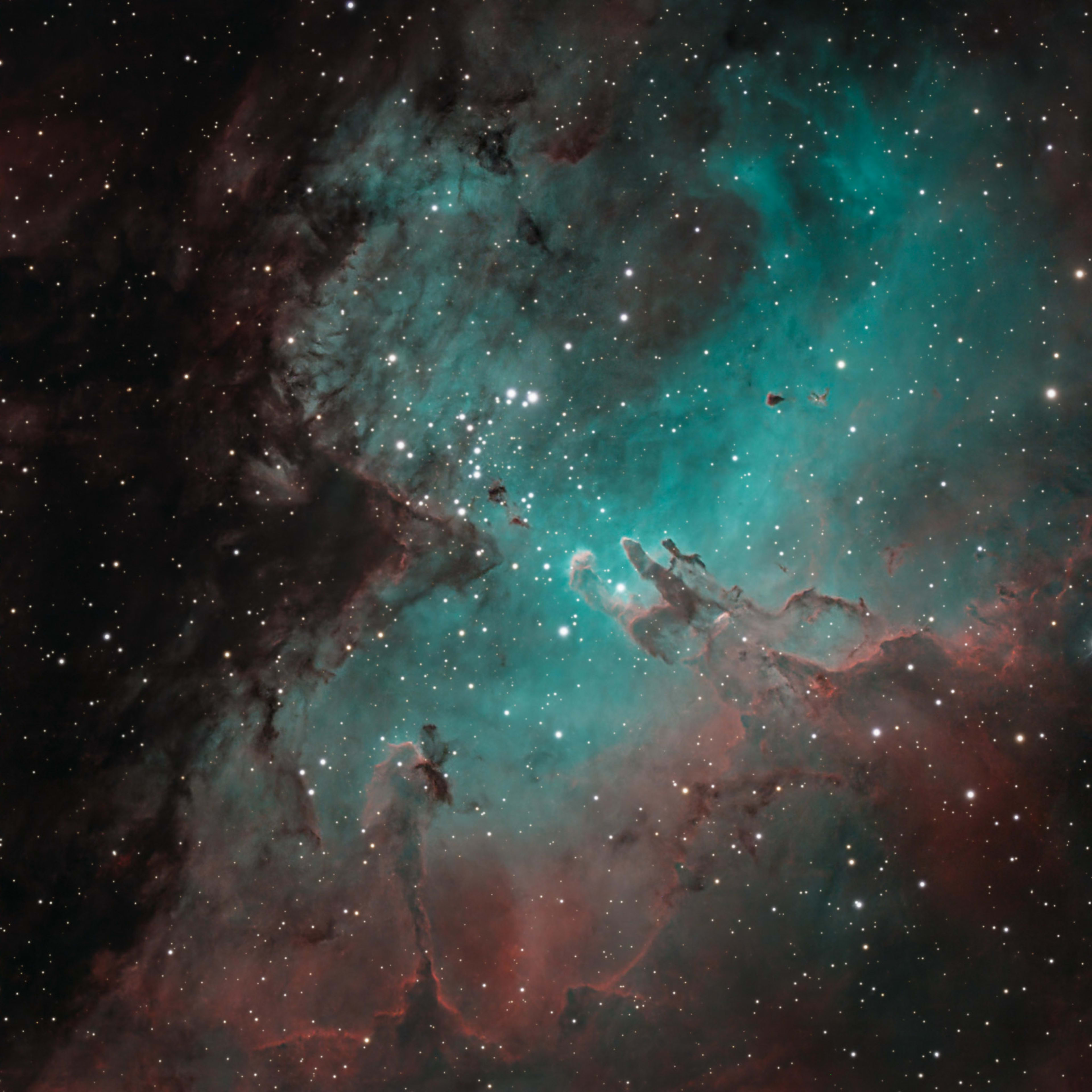
HOO palette. Hydrogen alpha mapped to red, oxygen III to both green and blue. This combination produces a natural-looking result close to how the nebula might appear in visible light, with warm reds from hydrogen and cool teals from oxygen.
SOO palette. Sulfur II mapped to red, oxygen III to green and blue. Swapping sulfur in for hydrogen shifts the red regions and can reveal areas where sulfur and oxygen overlap differently.
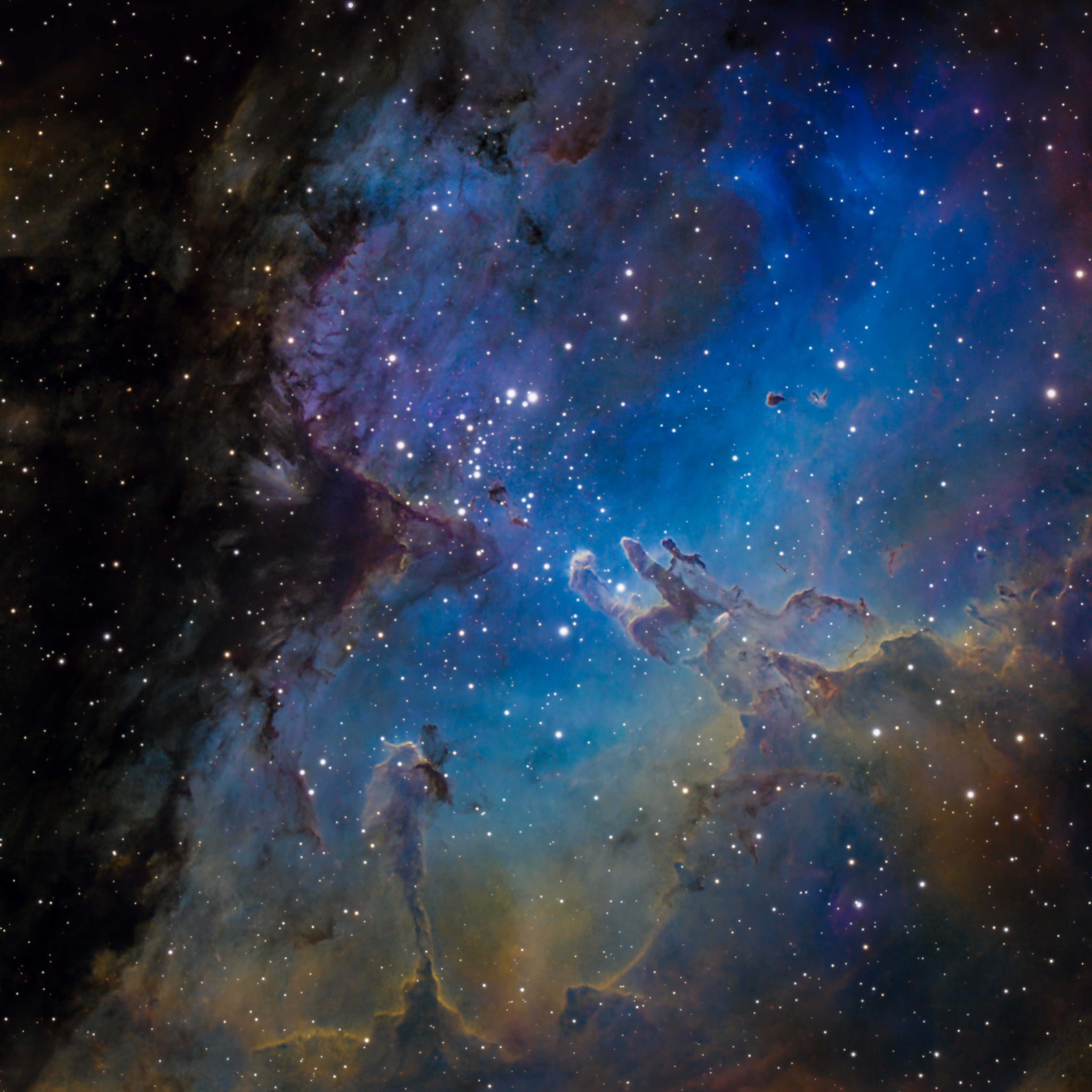
SHO palette (Hubble palette). Sulfur II to red, hydrogen alpha to green, oxygen III to blue. This is the palette used by the Hubble Space Telescope for many of its iconic nebula images. The green hydrogen channel gives the gas a golden color, while oxygen appears blue and sulfur appears red or orange.
 Island Skies Astro